


Airports are no longer just gateways to the skies – they’re complex, data-rich ecosystems and powerful economic engines. With non-aeronautical revenues from retail, food, and passenger services accounting for up to 60% of total income at major hubs, understanding passenger behaviour is now a strategic commercial priority.
Every minute, thousands of people flow through a modern airport, with each step, queue, and pause quietly captured by a network of sensors, cameras, and connected systems. Behind the scenes, data is orchestrating this movement, helping airports create experiences that feel seamless, calm, and even enjoyable.
Mapping the Passenger Journey in Motion
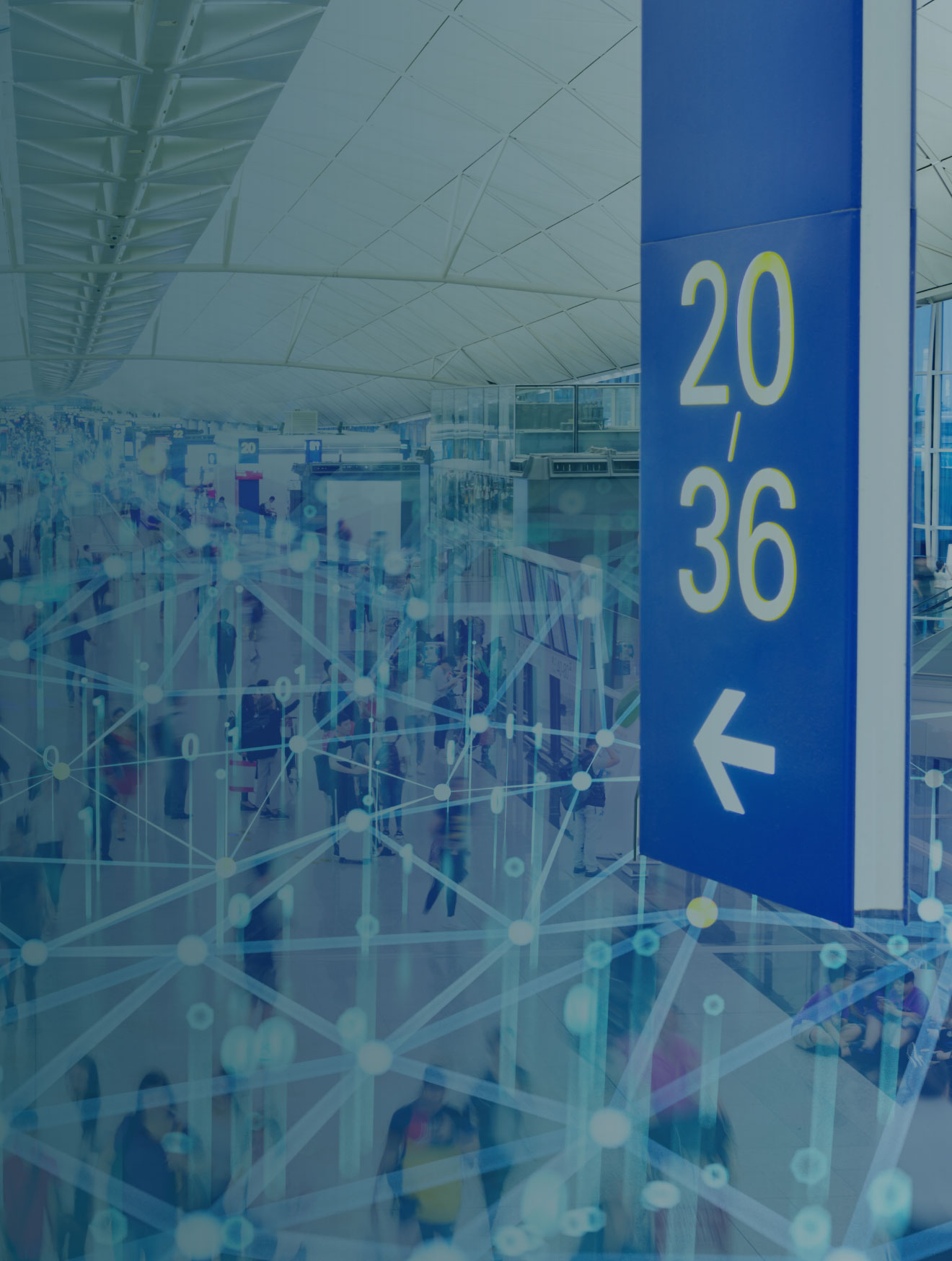
Next-generation airports are becoming intelligent spaces, equipped with Wi-Fi triangulation, Bluetooth beacons, and advanced 3D analytics to understand how people move.
People behave differently in crowds than as individuals – clustering, hesitating, and reacting to others in ways that traditional design rarely anticipates. Fusing multiple data streams reveals where passengers dwell, how they navigate, and where confusion or congestion arises.
When movement slows in areas without gates or amenities, that signals an opportunity: better wayfinding, dynamic signage, or even repositioned services. Intelligent systems can react instantly, from updating digital displays to pushing route guidance via mobile notifications – easing stress and improving flow. The result is a smoother ‘kerb-to-gate’ journey and a more relaxed, receptive passenger.
Location, Location
Tracking location data inside terminals is uniquely challenging. Concrete, glass, and steel can block GPS signals, and many passengers use their airline’s app rather than the airport’s, limiting the airport’s ability to collect authenticated user data.
That’s why airports are turning to anonymised, consent-compliant methods such as LiDAR, 3D video, and Wi-Fi triangulation. These tools reveal patterns without identifying individuals, allowing mapping of crowd size, direction, and density to show exactly how people interact with the terminal. In doing so, they unlock one of the most valuable currencies in the airport business: trusted, actionable insight into human movement.
From Operational Insight to Commercial Advantage
Reducing stress and confusion doesn’t just make passengers happier, it directly drives spend. Dwell time in retail and hospitality zones correlates strongly with higher conversion rates, and even small gains in “unhurried minutes” can deliver measurable uplifts in revenue.
Historical flow data allows airports to place stores, pop-ups, and digital screens where natural passenger paths converge. It highlights zones that encourage exploration, and those that don’t. Lighting, layout, and signage can all be tuned accordingly.
According to ACI World’s 2023 Airport Retail Study, passengers who feel informed and in control are up to 30% more likely to make discretionary purchases. The ability to predict and influence that behaviour, through integrated operational and geospatial intelligence, transforms everyday movement into measurable economic value.
The Geospatial Edge
Geospatial intelligence gives airports a new lens through which to understand themselves, by connecting spatial data, human movement, and commercial outcomes.
By fusing sensor, mapping, and CCTV analytics, airports can build a living, breathing model of how people and places interact. This enables more predictive, connected, and human-centred operations – optimising both passenger experience and commercial performance in real time.
At Informed Solutions, our track record in delivering geospatial and data-intelligence platforms across sectors helps us bring that same precision and insight into the aviation environment – translating data into better journeys, smarter operations, and stronger commercial outcomes.
Shaping the Predictive Airport
The airports that thrive in the coming decade will be those that see movement not as a metric, but as a moment of value, with each step a chance to connect operational excellence with commercial success.
The truly predictive airport will use spatial data not only to move people efficiently, but to help them feel they have time to pause, explore, and enjoy the journey – turning flow into value, and transit into experience.
To read Brian’s first blog in the series: Next Generation Airports: Engineering the Future Through Intelligent Use of Data – click HERE.

Talk to Us
Get in touch for more information on how we can help you accelerate and de-risk your digital business change.